Atkins Labcast Episode 67 - Jane Skeer, Artist.
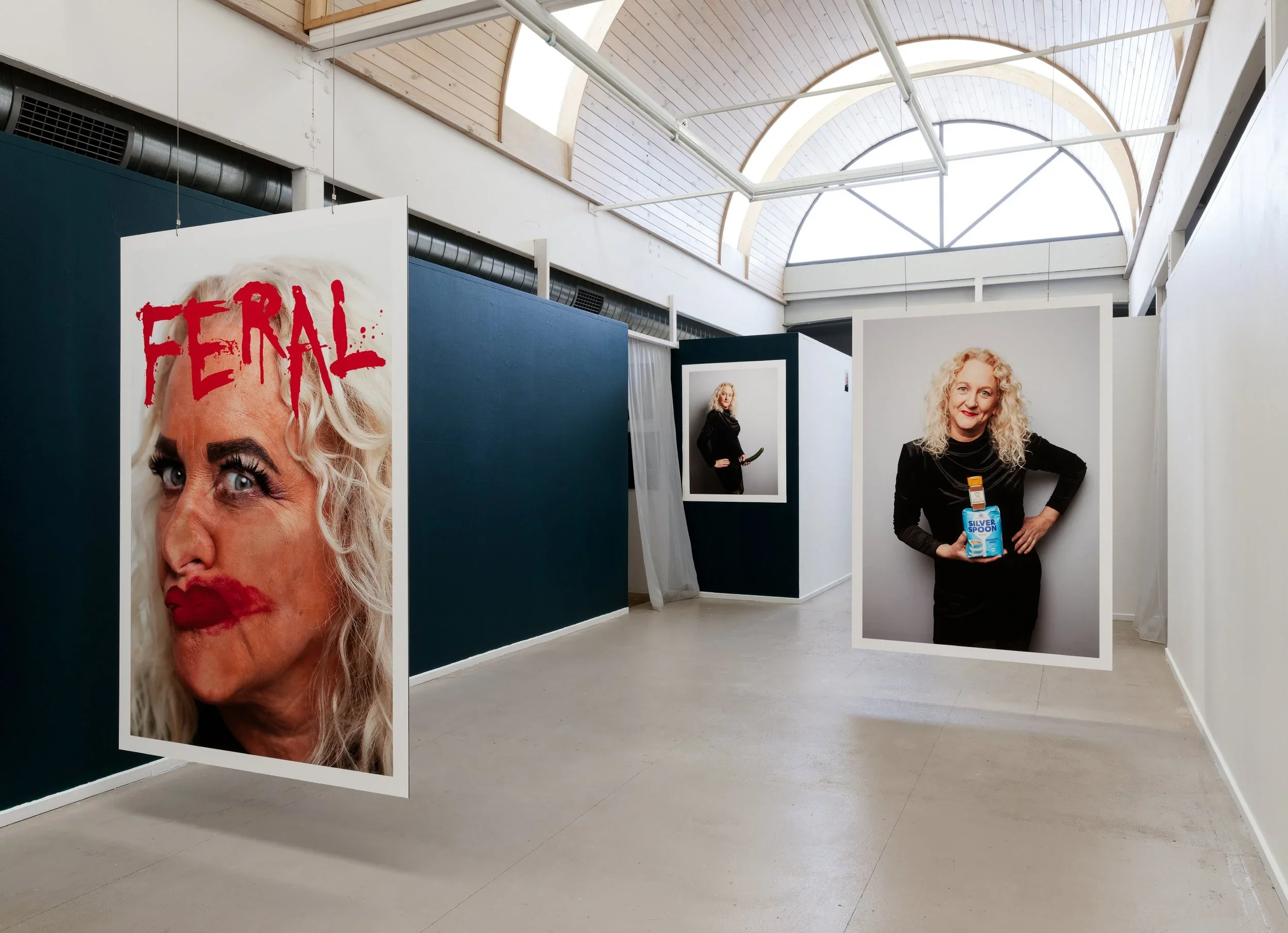
Still Feral
2026
Bauhaus Etching Paper, aluminium
Large images 160 x 110cm Smaller image 100 x 75cm
Photographer Thomas Main / Install Photographer Grant Hancock
In this episode… Paul sits down with Jane Skeer to discuss her remarkable journey as an artist. Jane's appetite for creating is unique as she follows inspiring ideas that sometimes sit quietly in the corner and sometimes fill enormous spaces. Jane is the artist many of us aspire to.
Jane Skeer is a finalist in The Advertiser Contemporary Art Award
Helpful links:
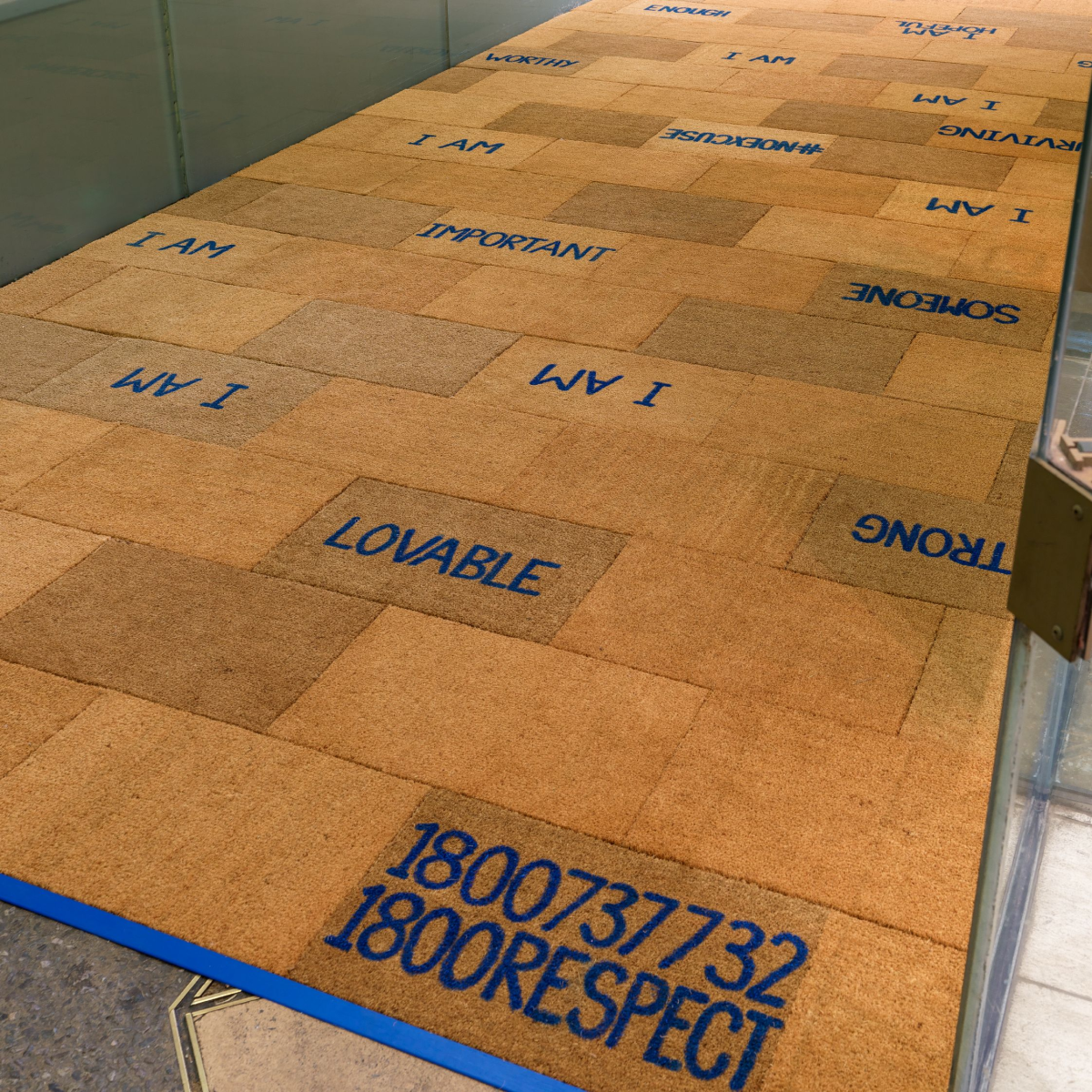
I am NOT your doormat, Installation, 700x208cm
Photo Credit: Grant Hancock
Apple - Spotify - Buzzsprout
Transcript
PA is Paul Atkins,
JS is Jane Skeer
PA 00:15
G'day listeners, welcome to another episode of the Atkins Labcast. This episode I sit down with Jane Skeer. Jane is an Adelaide-based visual artist working in sculpture, recycled materials and the like. She works at paint and pencil and even photography. Jane is one of those people whose work is, you know, really quite sophisticated and really dominates the space that you assume she's been at it all her life. And she hasn't, so there's a really great little story behind that. I'd encourage you to look at the show notes, look at her links, follow her, keep an eye open for her work. She's a significant artist. She's also working in Glasgow now as well Which is fabulous though. Not only Adelaide Famous, she's gonna be world famous. It's a great little episode, there's a lot to learn about You know, just getting on when making the stuff that makes you happy. So sit back and enjoy and thank you for listening. Um G'day Jane.
JS 01:28
How you doing, Paul?
PA 01:29
I'm fine, thank you. I've been wanting to interview you for a little while now because we've had a little bit of time together because I was a teacher for a minute before I killed the school off. I'm devastated about that. I I realized that I knew of your work before this. But it wasn't until I was we were I was watching you on Zoom and you were telling me a little bit about in the group or what's going on that I went, oh, that's Jane. And then I thought to myself that I feel like I've known of your work my entire, you know, thinking life, you know, from the 90s um when when I was in my 20s, and I thought I'd seen your work around, but that's not the case. No. You are a fresh artist. So tell us about what, how art came to you and Tell me, does the quote I threw one more dice mean anything to this story?
JS 02:28
It just meant I'm finally going to give it a go. But it's dead at 47 I decided to um Yeah, go to art school. Well I actually didn't s I didn't personally decide. My son helped me decide at um yeah, twenty four he was not wanting to go back and um Go back and and try anything new.
PA 02:46
So I just in gear, aren't you? As a as a person. So he was a bit lost, was he?
JS 02:52
Not necessarily. I think young people today they they don't get their shit together till they're forty So um anyway, so he was just in a bit of a lost place and and uh and said he was too old to go back and try again. So I thought, well, I'm forty-seven, I will just prove to him that you're not too old. So I pulled um I drove hopped in my car. I'd run out of um run out of solutions for him. And uh so I hopped in the car and drove down to Adelaide Central School of Art and said to Andrew at the front desk, I think I can paint
PA 03:21
Andrew Purvis.
JS 03:23
No, Andrew. Oh naive.
PA 03:25
Doesn't matter. Don't worry. Don't worry. Andrew.
JS 03:26
Anyway.
PA 03:27
But you thought you could paint.
JS 03:28
I thought I could paint. I'd never been in a sort of thing.
PA 03:30
What made you think you could paint?
JS 03:31
I just I just looked at paintings and thought I reckon I could do that. Um I um well I guess I'll I'll wind right back if if you let me, I guess. Um If you amuse me for a I would love to listen. So year eleven, I think it was in Ten at Tennyson College in Mount Gambia. I rocked up at the end of year twelve. The only subject I liked at school was art and English And I art was a bludge. I think that's why I liked it the most. And uh and then I I I I remember the c student counselor saying now what are you gonna be when you grow up? and and I had no idea. Um and uh I and I just didn't have an answer and then I I I did this painting. I played around with teapots and and painted repetitive teapots and and I thought that doesn't look too bad, you know, that looks all right. So I presented that for my end of year eleven work And uh I rocked up with it to take into the art class and I pulled up and my mate David Mayfield, who works locally in Adelaide here Um rocked up with his painting which to me was like a Hans Hysen which I didn't know about then, Hans Heysen landscape painting, like it was perfect. It was huge.
PA 04:38
It took up the whole boot.
JS 04:39
And he said, Jane, would you help me carry this in? Well, all of a sudden I lost, I'm not an artist. He's an artist. And that was it. I never gave art another thought Except for the fact that when I'd see a painting, I'd think, Oh, I could do that. Um, and uh also to back up and say that, I'd never been in an art gallery, never been in a museum. I've got four grown-up kids and yeah, I'd never m My husband had always taken them to those shows 'cause I didn't want to do it. No, but he had an interest in his kids. So he and he liked doing school excursions, whereas I um had them they were my excursion seven days a week at that time in my life and and I was looking for that day off whereas he wanted time with him
PA 05:20
Yeah.
JS 05:21
Um but yeah I played sport. I played netball, basketball, tennis, volleyball, anything. I played sport. I was a sportsman and and art was not for me in in my thinking, in what I thought what an artist was. And then obviously I had a son that was very arty and uh so me trying to get him to go back to uni, you know, the eldest. Um me trying to get him to go back to uni, I I the only thing I could think of was I'll go to the art school author I'll show him you can go to art school like at forty seven I can go to art s art school. And why why Central? 'Cause Central School I was a I was a mother then of a year twelve student at Loretto and I was involved in the Loreto art show.
PA 06:01
I was one of the committee members
JS 06:03
Still not an artist, but I was involved. I just liked being involved with the kids' schooling and stuff. So um so I was on that committee and I had found out that I Well, I thought that Adelaide Central School of Art was the place that us oldies went back to school and got a degree. Like th and so a lot of my peer like my my friends had gone and done a course here and a course there Which is what I thought I'd do. I'd just learn how to paint and I'd quit, like everything else I intended to do in my life. So to throw one more dice was I'm gonna do it for real. Yeah. Um and and and so it was just to prove a point, but then it became something a lot more. So in other words, um my son saved my life. I you know, I thought I was saving his life, but it turned out to be the other way around.
PA 06:48
So It's amazing. So so what do you think may have been Jane without Oh.
JS 06:52
Jane would have been sad because Jane was a mother and and that's really it. So I did work in our family business. Um but I was a mother and I I I had just given my whole life to their schooling and their sporting and their everything and that stops. Yeah, and then when that stopped I was devastated. I didn't know what to do with myself and and I And I and I wouldn't yeah, I never dreamed of doing what I'm doing now. Like it's it's amazing. But um yeah, it i I I don't know. I just I don't know what I would have done. I I would have had to feel it because I am A busy person, um, but I don't know what it would have been. So um I I can't believe not having it in my life now. Like it's just because I'm completely manic.
PA 07:34
So when was your first show
JS 07:36
When was my first show? It was at Floating Goose. They so Floating Floating Goose Studios opened up probably ten years ago when I graduated in 2015. They must have opened their doors in 2016.
PA 07:48
Great little place.
JS 07:49
Um And so they wanted a show to open them. So I was their opening show. So um so it was uh owed to the fishermen it was called. It was um at that time my mum was Dying and my father-in-law were dying. So the two of them so my my father-in-law had been uh a si or is was a successful cray fisherman out of Beachport. Yep. Or lobster they say these days, don't they?
PA 08:11
Um Well that there is a difference, isn't there?
JS 08:13
But they're we've always said crayfishing down there. Anyway, so he was a fisherman and and he'd just the year before so he got Alzheimer's. He he had that before he put it in.
PA 08:26
Terrible way to go.
JS 08:27
Yeah, and um so he rolled up his like uh fishing um You know, I used to watch him roll out the ropes like after he pulled pulled the ropes, the pots in each year and he'd roll them out in the driveway and we'd sort of watch him roll 'em up and I used to and I used to look at these rolls and think think look at the colours in those rolls, at the different depths That the rope had been in the water and how beautiful they were. But it wasn't until he passed away and he'd rolled them all up for his for his last time. And Then when I went down there when he got sick and he we realized he wasn't gonna go fishing again this next season, we looked at all these ropes and g and and we just dis Well, they were going to the bin and they're plastic, like rope is plastic. And at that stage in my career I was using only uh rubbish I was looking for um waste to make work out of because I couldn't afford to make work. Painting was too expensive. I decided through my art career that I had to do it cheaply because it was costing me so much to study.
PA 09:23
And I didn't want to be a big it's an expensive like Central School's a private art college. It does attract obviously a little bit of government funding. Our our youngest is going there and her partner's going there. And it is the greatest place on earth. You know, I I'm convinced. And I've actually heard a Patty from Praxis has said that it's probably the the best art school in Australia, um, the way it's run and it's attitude. And it's run out of the old Glenside Mental Hospital.
JS 09:50
It is.
PA 09:50
Which it really suits artists well, doesn't it?
JS 09:52
I felt very much at home.
PA 09:54
Yeah. But it's expensive because we're we're paying fees now, she's hexing it, and it's it's wild. You know, you think about getting out of that and with an art degree and all this debt and you go, What am I gonna do now? But I d I don't know. I think it's probably the best place on earth if you want to make that change, which is clearly what you're doing. So I I've seen some shows that you had around Central because you've got that on your on your website. So I've seen you using the space and the space is like all the students get to do. Um and so your focus was very much on you know, reusing materials because of the sad amount of waste that, you know, w we see going out there. Um, that theme Like it's changed with your work, hasn't it? It has. You know, what's what that when did that sort of start to fall away as a thing that your your brain was on to?
JS 10:46
Um, I did it for a reason that you'd never find. So basically the reason I w uh the probably that so yes I was I was using waste because it was cheap. But I was always also using waste because I felt like waste. So um for for all of my life um I was abused when I was young um and I've held that very tight In inwards. When I went to Adelaide Central School of Art, I was recommended to not talk about it. Um because I star it started to come out. Like I'd I'd sort of It's interesting I I'd sort of shoved a lot of the the hurts and the feelings and the frustrations in my wardrobe of, you know, private wardrobe and and uh and it started to come out through and I started writing poetry and I started writing things or making things that that kind of were starting to tell that story and I was recommended not to. And and and for a very good reason. I just spoke to a young guy I'm mentor mente mentoring today uh about this point because he questioned me about whether he should get more personal with his work. And and I and I said, Well I was advised not and he said, 'cause he was advised not. And I said, Yeah Because you gotta be sure when you put that sort of stuff out in the world, especially in the internet world that we work in today, it's out there. You can't put it back in the cupboard. You can't you can't once you've opened your mouth and said this is me and been vulnerable, as vulnerable as I was trying to be right then. So I I didn't. I just use waste as in waste and it was really just but nowadays I'm more truthful and it's taken me the ten years to do that. So it wasn't until I went to Glasgow School of Art on the SAMSTAG residency, uh SAMSTAG scholarship, sorry, um, that I I I obviously dug deeper because I'm okay, I've they've given me this massive scholarship, something I could never possibly dream of Um, and I need to be re I need to be honest, I need to be real, I need to I need to give them back something. I need to prove that I was worth investing in. And especially especially at being an older artist, a more mature artist. Um I don't know about mature, I don't think I don't think I'll ever grow up. Um, but I d I d I I just think they've invested in me and I have to give them everything I've got. And so hence Everything's open, everything's opened completely up, and it was there that I've changed. I went there as a sculptor installation artist, I would have called myself, using waste still probably majorit majority of the time But I've come out of there, I I do film, sound, photography, uh, you know, I've done m massive learning, lots of photography um lately. Um I've just I've just I I th what there was something the other day I thought that's me. It was I use I I I tell the story. The idea is what brings out the material I'll use now, not the material the material before was the reason I made. Whereas nowadays it's the idea, it's it's it's the story I'm trying to narrate will bring out that material, we'll use the material it needs to be told best in, if that makes any sense.
PA 13:51
Yeah, no, no, it does. It does. And look I I think the um uh like one of the things that caught my So I'm talking about your your your early work. The um I mean it was always so grand and r entire rooms taken over with it and entire spaces which physically that's a lot you know making that stuff it's insane it's it's crazy but the nanoblankets oh it's fun I know the nanoblankets with bottle caps And seeing them folded. They're so beautiful. They're so delicate. And yet you can hear and feel them just listening. And that little video of you dragging the bottle caps downstairs. at Central School because you know part one of the things is performance art and and all that kind of stuff. So, you know, everything everything you do is we're at such a fabulous volume. Like But big stuff you're taking over these huge spaces. Physically, how did you get on with that? Did you just it was fun? Yeah, well it's Were you got everyone to help you or do you just work through the night or what was the uh it just depends.
JS 14:49
Each each Each was different. So I don't know which ones you're talking about. So I'll talk about Matt Gambier in um Pine Tree Green, for instance, which was made I don't know how many years ago. Um probably A lot. Yeah, the Ridd uh Sir Robert Hiltman Theatre. I had maker work there. So I they uh uh Country Arts essay who has been my huge Biggest supporter.
PA 15:12
They're incredible.
JS 15:13
Absolutely. Anthony Palooza and his team are like second to none. They've just been legends for me. They believed in me, I guess. Um so I they They paid me to go down and do a month residency there. And again, like going to Glasgow and the death.
PA 15:27
Going home, wasn't it?
JS 15:28
That's what I mean. It was going home, which is really hard.
PA 15:31
And then here's a girl from the Big Smoke May Good. Yeah. Or who's left us Who's an arsehole and he's left us to go somewhere else. So you had all those feelings.
JS 15:40
I just it was really it was a lot of pressure because I didn't want to stuff up in my hometown. I wanted to do good. I wanted to make them something that I'd they'd be proud of Um so I went down there right when the pine trees were all getting sold to China. So everything was like really everyone was hurting down there.
PA 15:57
Um yeah, it was the ownership of the mill of the papers. And part of that was all the plantation stuff.
JS 16:03
Yeah. They were China would just bought everything and then they were just chopping all the trees down. So there was gonna be nothing left. I don't know where it's at now. That was a That was a few years ago. They're probably all gone. I don't know.
PA 16:12
Or they've worked it out and started planning, hopefully.
JS 16:15
But anyway, so pine trees was was on the com in the conversation heaps, so I spent a lot of time in the pine trees, which is what I loved to do as a kid. We used to go yaowie hunting out
PA 16:23
Oh wow. You didn't see the tenth noodle tiger amongst them, did you?
JS 16:27
No, no, Yahweh's was was different.
PA 16:30
But the that the whispery sounds and the
JS 16:32
Hushing from pine forests and laying in a pine forest and covering yourself with pine needles. So I did all that. Like that is the way I work. I'm playful. I covered myself. I did exactly what I used to do in but I'd go out there day after day just not getting any ideas and it really took till the week before I was due to come home and I thought, what am I going to do? And the week before. The week before. So pine trees and the other the other thing that the news and the news papers was were writing about was plastic and what they were going to do with plastic and how could how they could cope with how how they could recycle it and what you know what what the answers. So anyway, so it wasn't until that last week that I walked through Bunnings in a desperate state because I'm like, I have to make something. I've got no idea. My head My head was just like nowhere. I don't know. I'd be it was like I was just down there having a lovely holiday. Yeah, yeah. And then I walked through Bunnings and and I saw one plastic pot on its side a pl plastic, you know, plant pot and I saw the hole and the light was coming through the holes of the bottom of the pot. And all of a sudden that one pot I am looked up, I could imagine that was the pine trees. And it was me laying in the pine trees looking up through the hole of the the pot. And but uh but for me to show you what I saw, obviously I had to Yeah.
PA 17:49
Make a pine tree.
JS 17:50
And so then the then all the decision was easy. I had $1,000 for materials, so I bought a thousand pot plants. They were all ninety-nine cents each I bought a thousand plastic pots, sorry, not pot plants. Um and I bought different sizes 'cause straight away I thought, no, we need texture. They can't be all the same. They need so and they were slightly different colours, the smallers are and biggers and and and everything And then I just had to sell out. So then I still had no idea what I was going to do. I was just so I went to the Sir Robert Helpman Theatre. My dear auntie and uncle come and sat down next to me and watched and they passed me the they took the price tags off the pots and passed me the pots Because plastic was such a the it it it it covered the plastic, it covered the pine trees and then I used plastic cable ties making it worse To join them all together. But it was really important right from the start to to only put holes right in the tips of the of of the of the the top of the pop. Because I needed to donate them to someone. Because I was buying new plastic, I didn't want to waste them, so I donated them to Trees of Life at the end. If ever it was to come down, which it was, like it was only supposed to be up for like six months or something.
PA 18:54
So Trees for Life got it
JS 18:55
So Trees of Life got it at the end, so it was used because and my whole frustration with pots is why are we still buying plastic with our pots in when we can do that?
PA 19:03
And you want to degrade it.
JS 19:04
That can just go away the soil. Like I that was my fight. That's that's how I could allow myself, because it wasn't rubbish, to use something that was new. Yep. Um and plus it needed it wouldn't have if it was a second hand something it would have been brittle and it never would have it had to pass the test to go up There. Anyway, so I just had I took my put pots, my thousand pots, and I went and sat in the Sir Robert Hilton Theatre with no idea what it was going to be and just started drilling holes and connecting them and and it just whatever you we What you can see on my website is what happened, but I could never have made that outside and carried it in because it was probably five meters by five metres square. Like it was a huge work. But I just made it in the space Where people could watch me making it and uh and with my dear auntie and uncle next to me. And then eventually they got um people to come in on the hoist and they hoisted it up and I think it stayed there for three years, but it wasn't supposed to have that long a life. Um and people still tell me today how much they miss walking in there and seeing that work.
PA 20:03
Um That's like commanding a space like that. That's the s that's next level.
JS 20:08
But I had no idea that last week I still had no idea what it was gonna be. And that's um That's how I work, which is crazy 'cause it is a lot of stress, but it's I can't think I can't think. Of course it's stressful, but I love I thrive on it.
PA 20:22
Right.
JS 20:23
I do thrive.
PA 20:24
Do you like stop eating and drinking when you're doing it? Do you does it really shut down and just
JS 20:28
No, I'm I I just I d I just have to trust myself and I just have to sell out to okay, I that told me, something told me, my intuition uh that word some people hate to hear, intuition told me to buy that pot So I have to trust that that intuition's not going to let me down. And and if I bought that piece of paper there on the pad, I said I'd have to sell out and make that into something. Like that's just how I work. So I can't question Especially when time's against you like that. You've just got to make I mean everything can be made into something. It's just a matter of n having a start and having enough of.
PA 21:03
So did the did the family business give you some of those making skills Or are those making skills just been among stuff?
JS 21:10
I think the making skills come out of the sport. Um so I played very competitive sport, like I was a town team basketballer in Mount Gambier and I was I I I did lots of um state, came up for lots of state like playoffs and stuff. Yep. But playing under such tough coaches, Lorraine Faulkner and Beth Seal, uh were the best thing I could have ever had because they made me tough.
PA 21:33
Even though I'm pathetic and weak and they were kind in the way they made your top. So you did feel a bit abusive, didn't it? Would that would they work today Would that still be cooking down? No, but would they would people put up with them today?
JS 21:49
No, no way. But and I look I thri I thrived on that the same way I'm thriving today. I believe it was the way I was taught to play sport is the way I play my art practice.
PA 22:01
Um so did you want that for your kids too? Did you want that toughness for your kids?
JS 22:05
Yeah, I guess I and I guess that's why I do what I do. I don't tell my kids what to do, I kind of just show them. I just like, well, you know, I can't I can't tell you to do something if I can't if I won't do it. Like I have to be prepared to do what I'm telling you to do.
PA 22:19
But um And so was the intuition always there Like or was that something that came out of motherhood and I was a pathetic young person.
JS 22:26
No, I don't know. I I've always always been a playful, curious, curious, curious can't even say that word. Um I I've just been a kid
PA 22:35
And having a kid who had kids and and wanted to play with them. That's most of us.
JS 22:41
And yeah, I'd we'd go we'd look walk around the farm or look w walk around and we'd just look for things then you know I was always bringing stuff back into the house and all my furniture we lived on Kangaroo Island for five years and all my furniture over there were tree stumps and and and I just made things out of things and and that's what I realized when when the first um ha ha moment came in art was the fact that I'd always been an artist. I just didn't know. For me, art was drawing and painting and that was it I didn't know art could be so much more. And then I realized so back on in Kangaroo Island, I'm known for I put on Hey, hey, it's Friday night, like skit shows and and then m made my husband dress up in ridiculous costumes and I used to write him the skit like I used to write the the the the lines and he had to dri he drove around in the tractor like learning the lines cause I never had the courage to get up and And and be that comedian.
PA 23:35
So what what town was it in Ka on KI?
JS 23:38
Pandana.
PA 23:38
Pandana, right. So um So he how did he put up with all of this?
JS 23:43
And how does he put up with everything I've put him through? It's for all of those big probably every big installation, there's been a moment, the Matt Gambier one I didn't need him. Uh the twine in Bordertown and like that I'll use that for an example. So um Naomi Fallon got me to do through country artists. I went down to Bordertown and did much the same thing. Um No, that work took me about six months to make, actually. I made that in the studio here. Anyway, we got down there. So the twine was supposed to just hang from the ceiling and and do a um loop from in two galleries just make a rainbow. At that time in Australia, um a bale of hay was was they were being carted up to cans or somewhere up north of Queensland. Like a ha a to me a bale of hay was was was worth more than gold to a farmer. Um and I was watching all these trucks and and then I thought, well, you know, I'm going to Bordertown, I'm going to the farming district that were some of the ones that were driving the hay up to Cairns Um, and I thought, well, I'll build a rainbow 'cause the pot of gold's at the end of the twine. Like it's it's it is the twine. So I be and Naomi wanted me to wrap something well not wrap something, just take up the two gallery spaces and And at that stage being an installation artist, I didn't know you just build an installation, that's what you do. Um so I went down there and got there and the engineer, architect engineer it would have been, of the gallery said I couldn't hang it And we had a week to put this work up.
PA 25:10
So I'd made this work so heavy as well.
JS 25:13
It was just they didn't have the specs for the ceiling, which, you know, I've worked on a show in the art gallery and I've seen the same thing happen. You actually have to, yeah, it has to be engineering sound and you want people to walk in it. So you want it to be safe. Yeah, yeah. So a week out and and mm Brett's face dropped, Naomi's face dropped, and and they're just like starting to oh but but fight and I'm like, no no no we just gotta find a solution. So and then after a while sitting around I just thought, well Just leave me, leave me. I need quiet. That's when I need everyone to bugger off and I need to just think. Now how can I do this? So I just start drawing and eventually I came up with the idea of an arbor
PA 25:52
Oh yeah.
JS 25:53
I've said that one. Yeah, yeah.
PA 25:55
An internal track.
JS 25:56
So let's just build an arbor.
PA 25:57
So it's self-supporting.
JS 25:58
Will that be or the engineer had to come in, yeah, that's fine. Okay, so let's go back to timber. So It was the next day, I think that that was the Monday we when we first went there on the Tuesday we rocked up with all the timber, built an arbor and and hung the twine. So it was not a drama. But it's just a matter I've
PA 26:13
So Brett and and sorry, that was what uh that was the story I was originally telling.
JS 26:17
Brett'll always say, That can't be done, Jane. Whatever I say, I want this. I want to build this and I want it to look like that. Brett's first words will always be it can't be done. And then he'll argue and and I'll say, No, but it's got to be done. He said, It can't be done, John. You cannot do it. And out of that will come It will be done, Brett. And it will.
PA 26:34
So you dig in.
JS 26:35
Yeah But I don't do yet he d has had to do the m do the prep he can make anything but I I can see it. I Yeah, so and it's worked so far.
PA 26:45
Doesn't say it's always doesn't say it's always gonna work. That's like my wife and myself, Kate and I. She's like, let's do this and I How are we gonna pay for that? You know, what what's how does how does that work? Just try you know it'll work. And then I think the back and forwarding in the middle there, the thing comes together. Yep. That's wild. That's wild. So Kangaroo Island, he was driving on the tractor, learning the lines. You put him on the stage because he's a happy performer.
JS 27:10
Yep.
PA 27:11
Bloody hell. So okay.
JS 27:14
Well I don't why is it telling you that? Oh well doesn't matter. We won't go back. We'll go forward.
PA 27:18
No, I know. We're we're just talking about like because this this prolific Installation work is really very f you know all consuming. It takes over the spaces, people get attention, you get invitations to do sorts of things, you get prizes, right? Get awards, you get opportunities and scholarships. Um Tell us, like I you I know I know you're on your way back to Scotland. You've been to Scotland a couple of times. What does an Adelaide artist have to do with Scotland and how do you how do you get there and how do they invite you? What's the story
JS 27:51
So I won the SamStag Scholarship. Yes. And I had to choose somewhere in the world. I had to go somewhere in the world. And um I chose to go to Glasgow School of Art. purely for the fact that most artists I'd studied that were similar makers to me had studied or come out of Glasgow School of Art.
PA 28:07
Why Gla wh why?
JS 28:08
I don't know. But just it has really s really brought, you know, a lot of people have come through its system. So I figured if I want to be as good as a good artist as any of those any any of my heroes, then I need to go to Glasgow School of Art
PA 28:20
Gotcha.
JS 28:21
Never thought I'd have the opportunity to do it, never thought I had to worry about this conversation. But I I s I somehow did enough to to be picked as a as a SAMSAG scholar.
PA 28:31
And so I went across It's a really huge thing, this SAMSAG scholarship.
JS 28:35
It was a really lot of money and a lot of yeah Back like you know, a lot of people. Yeah. Yeah, a lot of background.
PA 28:40
You should be really, really, really proud of you.
JS 28:42
Yeah, so I'm very, very lucky. I work I worked hard enough to be very, very lucky It's what I did. And uh and so I went across and and I rang a couple of the previous scholars and and asked them, a couple that had gone to Glasgow School of Art actually and said, What should I do? I should do the MLIP program. So I was gonna do the Mlit course, which is a twelve month master's because Masters in Literature? Masters of Fine Art.
PA 29:09
Right.
JS 29:10
And uh and that was um at Glasgow School of Art, obviously, and the Samstag Scholarship was only a one year thing And I spoke to one particular artist that had done it before and she said, don't do the MLET course. You don't get enough personal. You don't get enough assistance. There's a hundred MLET students and if you do the masters, there's only 25 So you'll get one-on-one attention, you'll get, you know, loved and cared for a bit more. And she said, doesn't you don't have to finish it. But she said, do that, and then you might decide to or you might decide to come back. So And obviously like me, I I decide, oh, I'm gonna finish this. So I I d I I booked myself in for the Masters of Fine Art, the two year course, and did one year and at the end of one year I still had a lot of money left in my bank account and I thought I could come back to Australia as as one of Australia's wealthiest artists. Which you don't have to have a lot of doesn't have it a lot to have a or I just sp in reinvest that in myself and I finished the course. So I came back and sold my caravan And uh and and then use the rest of the money and that gave me enough money to do finish the course so I could complete the Master of Fine Arts a two year degree. Yep. Um, and feel very proud And then um it was the second to last day there. I was packing up my stuff ready to come back to Australia. I had no intention of going back to Glasgow unless I was called back. Um And Francis, my my one of my supervisors, the person that I personally had in my second year of my masters, came up and said, um I don't want to see you going back to Adelaide and disappear in a shed and we never see you again, Jane. Would you consider coming back and trying trying Trying to get yourself a UK present. And I just went, oh my God, Francis, you have to you have to go home and tell my family. And uh And I said, what what time what what are you talking? How how much? And he said, well, six months of the year, could you do six months here and six months at home? And I'm just like I'm saying yes and I'm saying no at the same time.
PA 31:04
You want to say yes, don't you?
JS 31:06
It's like if I was young I wouldn't go like I really wouldn't have come back. I would have probably gone. You know, 'cause you can experience so much. Not that I'd stay there forever. I think Australia is an amazing place to make art. But there to see art, to be around art, to experience art, you know, I I still probably could have done a hell of a lot more. So anyway, I came back to my I came back to Australia and within the first week of being back I drove to Melbourne to rich see Richard Lewis, my mentor at Melbourne. I thought if see if he agrees with with with Francis then I'll consider it So I drove straight to Richard, I said, this is what Francis wants me to do, what do you think? And Francis says uh sorry, Richard said, just do it, of course you do it Yeah, forget about us, just g go and do it, Jane. And I'm like, oh my God. Um okay, the pressure is really on. And Brett was with me. So at least he heard it like fresh first hand from Richard. And then he Anything Richard says Brett agrees with, whether he does or not, uh is another thing.
PA 32:01
But anyway huge.
JS 32:03
So I've been trying to and obviously I'm a grandmother and I've just had my fourth grandchild. I've got four kids, four four grandchildren and a husband. But I'm that I'm living away for from for nearly like it's been close to six months for the last two years, so and I'll be a bit longer, yeah.
PA 32:21
I mean y it wasn't that long ago where You know, people be gone for a couple of years just 'cause that's what it took to get to Europe and do something or go to war or whatever, you know, you were gone for a couple of years. Like it's It's nothing new, but it's not a very modern thing to be apart from your family to like that.
JS 32:37
It's Yeah.
PA 32:39
And and when you're there Uh, who are you over there? Do you feel you like very much more yourself or do you feel like there's a bit of home that you're reaching out for all the time, or what happens?
JS 32:50
No, I just get busy. It's it's like I like seven days a week I'm in the studio. I'm just like I'm a mother and grandmother, like I said, and my life is so busy in Adelaide. Like I don't have it's hard to find the time to be Jane to be the real Jane, to be to be an artist, to be in the studio, to like the the demands of being a mother and a grandmother and and anything else that that comes with you is is a lot. That you never fully you. You never you are, you're you, you're a different you. Um over there I'm the artist me and I come back here and I try to give a bit more time. You know, I try to Give myself a bit more to my family when I come back because I've had such you know, the last three months I've been so busy over there. Like it was seven days a week. I had a show, it was the Glasgow International Art Festival, it was there was so many conferences I got involved with. I met so many dynamic artists and people that I've will will build long-term um art relationships with. And now I've um A beautiful, beautiful artist that is that has built so many, helped um build so many UK European artists over there, all the big names. All my heroes. Um, their mentor is now she's grabbed hold of me and she's like she's calling me the mini me and and she's just like telling i she's Every couple of days I've got a message on my thing saying, read this book, Jane, do this, go this. She's recommending me go to all these things. And and uh and so now I've got I've got These people that that again it's like the Samstag, these people that are investing their time in me, that want to invest in me, um, that I can't let down. I can, but I don't want to. Like it's just I need to give them back because they're giving their time to me I have tried to get funding to pay Francis and Sam some money to mentor me properly, even though they are mentoring me properly.
PA 34:40
But I I'm Yeah, so you feel like I haven't got funding.
JS 34:43
I c I'm no good at Oh I haven't at to this point I've never got Arts SA creative light funding. I don't know how to get it. Um see I'm real. Not everybody, you know. It's just I don't know what I need to do um to get that So um I'm just so lucky these people and I've got to give back to them. So my way of of giving back to them is buying them Hague's chocolate and uh and and filling them with love and and hopefully I We'll become the artist they're trying they're they're trying to help me become.
PA 35:13
That's wild. Um so what like Where would you really like to show what's in the back of your head that you maybe haven't said out loud? Where like a Venice Biennale or what are you what are you shooting for?
JS 35:26
I don't know whether I want to say that live.
PA 35:28
I don't know where I want to say the tape.
JS 35:30
Like why why wouldn't you just go for the tape? Um Edinburgh, I'd love to show in the National Gallery there, which does you which doesn't seem that unachievable. Um
PA 35:39
At present.
JS 35:40
Um six months ago. Um but that's yeah, I don't I don't want to foresee that. And you know what? I don't think it is about the showing. It's just I want to show where I can show. I wanna keep working till I die, basically. I just wanna make art. And I'm just so happy to have this.
PA 35:55
So And I reckon everyone around you would be feeling that joy.
JS 35:59
Yeah.
PA 35:59
Especially if you felt if you felt a bit lost before you picked it up. Um, and they probably would have felt that. Although I'd imagine you'd have thrown yourself into the the mother role and the helping out at school and I'm sure you threw yourself in the role and everyone thought you were the life of the party still then. Yeah, they still do. You are the actual party itself. Yeah. No, it's wonderful. It's it's great. Did did the you know, I'm I'm really interested about your intuition Um and I know you said uh when you said intuition, you're you said everyone like like a derogatory thing. It's some magic.
JS 36:34
We overuse the word.
PA 36:34
Yeah. But it is true. It's a really interesting thing because I like I I've been told I need to uh listen to my intuition more, but I'm filled with doubt about it.
JS 36:48
Oh, absolutely. That comes with it. It comes with it. They come
PA 36:51
Yeah, but it doesn't it d doesn't doesn't the amount of times you're right reinforce your intuition? No. No. Why would you follow it if it's not been right very long?
JS 37:01
Because I just have to pretend it's helping me And pretending it hasn't let me down just yet. So I'm I'm bravely saying, yeah, my intuition says and it doesn't actually I can't hear it say it. It just I just It's when I see something, this I'll use this as an excuse. If I'm walking along a footpath here in Adelaide, anywhere, and I see something And I walk over it and straight away I know I've got to photograph that. I walk over it. Um I'll use this for an ex- So while I was in my first year doing my MFA in Glasgow, I walked past, I couldn't find delight in anything 'cause everything was so wet and cold and and and Glasgow is a very dirty people told me it was gritty. I'll love it there because it was so gritty. Well to me it was so dirty. Like I'd come out of India and I was finding Glasgow dirty. And you know, there were big signs all over Glasgow, People Make Glasgow. And I'm like, all I wanted to do, this was my very first artwork I wanted to do, I wanted to dress in a pink, the same colour as the sign, People Make Glasgow. I wanted to be in a bright pink overall and I just wanted to go round and clean the city. I wanted to just walk around with a rubbish bag and I started I did and I started bringing the rubbish back to the studio and I thought the cleaners are gonna hate me. I had about three or four bags of rubbish Big black bags and and then I thought it's gonna stink. It's gonna I'm gonna have rats, we're gonna have festival studios. So I better get rid of that idea. Nice idea, Jane, but I didn't go with my intuition. My intuition still to this day tells me I need to do that. Um, but I have gone against it. So that was not what I was telling you.
PA 38:32
You don't have to pick up the rubbish for it to be a thing.
JS 38:35
Yeah, but I needed to. So I wanted to pick it up. Um Yeah, and I wanted to put pli uh people make Glasgow like on the back of my overalls as I did it so I could do that. But I couldn't I'd never I'd have to do that for the rest of my life to be satisfied. Um Did you quite so I walked around and all I could see at that point was vomit or dog poo.
PA 38:54
Yep.
JS 38:55
Yeah. So what what do I do? I walk over a dog poo and I'm like, oh, I've got to take a photo of that. I don't know why I've got to take a photo of it and then I'd take a photo of it and look at it. I'm like, mm, does look like that. Yeah, all right. So then I'd walk past and I was not showing anybody these photos. And that's all I could see. I was seeing dark, it was gloomy, it was light. And I had to I I am so someone that walks around Adelaide with my head in the clouds because I can look up because there's nothing I'm gonna tread on generally. Um so I my head's never down on the ground. But in Glasgow I was walking with my head down because I was too scared not to to for what I would walk into. So I started photographing it very secretly and then I was showing all these beautiful, I was making Um I was making circles out of things falling down off buildings. I was making art on the ground everywhere, like beautifying Glasgow um instead of showing what I was seeing. And and it was Francis that said to me then, so the the guy wasn't my um supervisor at that stage, he was just the lecturer that came in and chatted. And he said, Jane, I can see what you're doing But you even though you've beautified these things and made these gorgeous circles, it's an anxiety. I'm feeling your anxiety that looms behind these works. I don't see the pr beauty. I don't see it. I I wanna see just a piece of that by itself.
PA 40:12
So did he saying that make you realize you're doing out of anxiousness?
JS 40:16
So he just said, I want to see what you are anxious about. And I said, really? And he said, yeah and he said, yes, of course. And I said, well, this is what I'm anxious about. And I showed him, I flicked my phone through a few photos and I had a dog poo that looked like uh a girl riding on a horse. I had a dog poo that looked like the scream. I had a dog poo that looked like a smiling face. And he said, Now this is what I want to see. This is perfect. So that's what I showed for my interim show, giant um photographs of dog poo. So um which, you know, most people thought I was off the start.
PA 40:50
I don't know, followed up by the knickers. Yes.
JS 40:52
By the show of Well, yeah, that's another story. So yeah, they said then the girl one of the girls that really loved it the dog poo was very well explained.
PA 41:01
I haven't seen I haven't found that in my looking. It's but I was having a time.
JS 41:05
Yeah, yeah. It's um One particular girl that really loved the dog d dog poo just came to my graduation at the end of MFA just to see what I'd done this time. What have you worked on this time? And I went, oh, I haven't moved very far, have I? I've gone from shit to knickers. It was like, oh my god. I thought of that. I thought I'd moved on further and I haven't. I've spent two years and all I've done is shed a knickers.
PA 41:31
So tell us about the knickers, because that uh that's a pretty cool body of work.
JS 41:36
Yeah, so that was uh so the following year Um, I'd worked with the other thing I'd worked with in the first year was cardboard. So I'd mushed up all these cardboard boxes and made balls out of them, which to me they look like poo as well. Um So I made lots of balls and everything. And I was the following year I thought I'll just build a huge installation now these balls, because they were really beautiful things and they're also on my website somewhere. Um And uh so I had mountains and mountains of balls. I probably had uh a thousand cardboard each each ball was one cardboard box that I'd mushed down and made into a ball. Um, and so after the first week in MFA, I looked at them and I thought, I'm hearing Richard Lewis' words, um, saying, you know, get rid of it.
PA 42:19
Once you've done something, don't go and work with it.
JS 42:22
And then Francis came in, always Francis. See, he's the one that really I do li did listen to. Um and he'd say, I know you can do that You're at school once, you're here, you you got this little opportunity, why don't you move on, move to something else? And I thought, you're right, that's exactly what Richard was telling me in my head and I'm hearing you say it in your words, so I thought, right, so I just Put 'em in a container, stu ch took 'em straight down to the rubbish bin, chucked 'em all out. Wow. Which was really hard. Um, because most of the other students stayed working on the same work that they worked right through till then.
PA 42:58
Second year. So Because you didn't have a the next plan, did you?
JS 43:00
No, I had no plan. So I had to sit with bare walls, which is what Richard always says to me. So you've got to sit with bare white walls, otherwise you can't move forward.
PA 43:08
I thought that was like the worst thing an artist can do is have a blank canvas, you know? But no. No, no, no apparently not, no.
JS 43:16
That's right. So um so I threw them out and Um, I sat around and I thought, what can I do? What can I do? And and I had a couple of friends that worked in aged care. And and for some reason I I just kept saying to myself, I need to pull my big girl pants up, I need to pull my knickers up Um, you know, to find out what really Jane is. And the more I said that to the mo myself, uh the more I thought, well, what's with the knickers anyway? Like It's with knickers. So I said to these couple of girls, do you what do you do when someone passes away? Do you what do you do with their clothes and their knickers and stuff? And she said, Oh, we've got heaps of knickers. And I and she and she said, You're not allowed to tell anyone. Anyway, so she brought me, I said, bring me what you've got. So they brought me all these old girl knickers and that was me. I was that old girl. I was I was telling the story and Um, and I did want to go down that that deep track of these were people passed on, but there was too many permissions and everything that I'd have to go through to actually use them the way I was going to use them. But it was me. So basically I told the story of even though they weren't my knickers, they were me pulling my big gal knickers up before it's too late.
PA 44:19
Yeah, right. So We I've watched them. I've only uh it's a it's a gorgeous show and it's like it I'd love to I I didn't see it in f physically. I'd love to have seen it right and and had the presence of it. Um You said you started photographing Pooh.
JS 44:38
Yep.
PA 44:39
I often are asking about photography. Yeah. When did photography start to come into all this work of yours? Because it if you look at your work, you wouldn't think photography. Up up until, you know, w what I can see on your website, you're thinking about the Knickers and of course um uh Ferrell and um and this latest piece, which is you know, which has also got you a a finalist uh in in in a festival. Where did photography fit into your life and and when did you pick it up and all that sort of stuff?
JS 45:11
Okay. So my studio has always been at Collective Haunted Nord and I had a You started Collective Haunted. I did, yeah. Um We just a heap of us that graduated from Adelaide Central School School of Art just wanted to stay together, so we started that to have a studio ourselves. Um and then eight years later I've just stepped away now Basically because I'll tell you that before I get to that.
PA 45:31
And they have to put their own big girl sneakers on.
JS 45:33
Well, it was just that I was away six months of the year and it's just unfair and they're running it really well without me and everything every time I tried to butt back in it was like m uh you know, a an insistent nag really. So you know, step out, let them let them take over and and let them continue it and grow it, probably without me. So it's a good thing. Um, I needed that money, that twelve months rent to pay for a one Glasgow overseas holidays. Not holidays, I've said holidays. There's not one bit of holiday in it. Um
PA 46:01
Don't worry, we don't we believe anyway. We believe you.
JS 46:04
Um so photography. So photography, um I've I've taken photos. I've always been a photographer with iPhone. I've never owned a camera in my life, still don't Um and I was using taking photographs of all the little instances that interest me as I walk along those footpaths and stuff, I'd I use my photograph and and and I've always had a pretty good eye for photography. But I've never known what to ask Grant Grant Grant Hancock. Well he'll say, Well, how do you want this? What how does this look, Jane? And I don't I I'll just say you decide 'cause I don't know anything about ph phot like photography. And it was do doing that I always felt like I always said to Grant, God, I need to understand this a bit more. So there was always a bit of a Yeah, question why, you know, but having the time is is is the hard thing. So when I went to Glasgow, I'd come out of this really big studio and I'd gone into this little desk sized studio and that's all I had. And I all I remember I thought, how the heck am I gonna work here? And I remembered Anna Horn coming into a Adelaide Central School of Art, ArtSpeak And saying that she did exactly the same thing. She was making big work and then and she's a previous Adelaide Central School of Art graduate Um, and and then she went and did an art space residency in Sydney and was put in this tiny little space and ha and and she didn't have a car. She had to walk ho walk from home to the studio. So there was no way she could make keep making big work. And so I was in much the same situation. So I took Anna's advice. Um and and and I just thought, right, I've got to learn how to make small and more intelligent work, I hope. Which is what I'm not gonna say that I've done that, but I I I cr I had to learn to create work um without taking up space. So f I I did lean towards photography. I still was taking it with my iPhone and um and then I was paying. I pulled a photography student out of the photography department at Glasgow School of Art and got him to take the photos of Ferrell and and the photos of me that started to tell my story And photos of the under underwear, 'cause I did I presented them in etchings and also in f for photography, but I didn't know how to ask Thomas to do the same thing. So my mission was I thought, how can I come back to Australia and be content after doing two years at a master's in Glasgow School of Art? And I thought, I need to be busy. So I straightaway booked myself into a photography class and I started the week I got back. So I started with um Center of Creative Photography and I've only done Six or eight. Six or eight courses. Like courses I wanted to do so much more. There's so much I need to learn. Um but yeah, I I again like starting at Adelaide Central School of Art. wanting to paint. I wanted to learn the basics so that I could t tell the photographers what to do. But of course I I got it wasn't intuition, it was just pigheadedness that I got into it and I just had to keep going and keep learning and keep get better at it, get better at it, get better at it.
PA 49:06
Yeah, because it is a it is a point where you can have it. But I think most people These days are learning by doing and you can see the results immediately. Yeah. You are learning. You're t you're set you're teaching yourself in that way But there is so much more when you know how it all works.
JS 49:22
Yeah, and it's important to keep learning. I guess we we don't just become an artist overnight. We're always becoming an artist. like we're always becoming a person. We're always growing into ourselves. We're always growing. So I want to keep moving, I guess, with the technology and and I just yeah, so my need to understanding slowly became, I think I could do this. I think I can, you know, this can this has got a place in my art practice. Yeah, I don't know.
PA 49:48
It's just how do you feel about the like obviously making work with like grand work with Scrap plastic. Um, you know, we talked about the cost of the piece that you you'd entered being a couple of grand. Like you can't you can't make the grand shows with photography because the costs are so high. Even if you printed it yourself, you still got a like six hundred dollars, you know, worth of ink and this in a you know to tank up 'em. It doesn't it's one of those strange little things that yes you can do it.
JS 50:19
Yep
PA 50:19
But that t step to making it onto the wall is actually a really big expensive thing.
JS 50:24
It is. Absolutely.
PA 50:25
Um and how are you reconciling that with with your thinking and your work? Is it is it you're scaling us your shows down or are you Um what's your plan?
JS 50:33
Well the next couple of projects aren't gonna be photography. Like I I I I made I had a really big show this year. I guess it was this year. I guess we're still in that year. In February it was. Um and they were really big prints, but I did get some money through Norwood Council. to help me pay for those and they work like a fortune. And they're the works that have just been um got me uh as a finalist in the Advertiser um Contemporary Art Award, which will be hanging in the Advertiser till Saturday Till September, not Saturday. Starting Saturday. It's not even starting Saturday. It starts next week sometime.
PA 51:04
Oh is it?
JS 51:05
Um with the opening of sale.
PA 51:06
You've got to deliver them this week, don't you?
JS 51:08
It's delivered. Okay. Um yeah, so So those works were um I did get some funding, but yeah, it was a very costly, yeah. And it was then that I just had to like I can't afford to do this at the moment.
PA 51:19
So But it does make it that you can sell them easier And you can addition them. So it it can work, you know?
JS 51:26
Yeah, have have my head looking at you over there, bitch. Like it's just it's look, there there's a place for it. And there's a time for it. But it like some I might have just finished, just taken down a show in Glasgow, just got home a week ago. And um and that was there was it was just Me and the paintbrush, me and a graphite pencil and and uh yeah.
PA 51:46
And I do work But also the time. Like there's the other flip over. You can make a photographic work in an afternoon.
JS 51:53
Yeah.
PA 51:53
I don't know if you can make a big similar size graphite.
JS 51:56
Like you're 'cause then that's I'm back to a rep repetitious practice, which is still what I love to do. And after coming out of making a couple of shows with photography, it's nice to actually sit down with a pencil and just be repetitious and be alone with your thoughts. So f so for the last probably how many months? Three months, four months Um, I that's what I've just been doing. I've just been working like it's taken me that long to just get that show ready. And because it was just me writing a damned if I do, a damned if I don't, a damned if I do, a damned if I don't, like I'm just like um
PA 52:30
Yeah, so is that around the decision about Glasgow?
JS 52:34
It is totally, because uh that's what I haven't so I I tell my story wherever Wherever I'm at at the moment is what you'll see what you'll find in my art if you if you're looking for it. Um I'm very I was at a very fr I'm not now, it's fixed like I've I've come through that process and I feel great.
PA 52:52
When we talked last at the opening of the CCP show, were you at that
JS 52:57
Yes.
PA 52:58
Damned if you do, damn if you don't, you west door.
JS 53:00
Because I'm getting picked on a I'm not getting picked picked on's probably not the word. I'm getting um A lot of well-meaning advice from dear family and friends about what I'm doing to my family and and and situation here because I'm leaving them. If I 'Cause I'm a woman. So it's the whole um if I was if I was a man going away to work in the mines, I'd be fine, but I'm not. I'm a woman leaving the husband behind who's, you know I shouldn't be doing that. So I'm getting a lot of well meaning advice that's pretty heart rate it's pretty hard to take. And it did so in the end I just kept thinking it's damn I'm damned if I do and I'm damned if I don't. Like I really I've given Brett forty years of marriage and I'm not leaving. Like I'm just like um I I I've I've given my kids everything I can possibly give them, but I'd like to keep going with this practice to prove to my kids that they're never never too old to stop dreaming. So I'm 61 and heading towards 62 very fast. And uh And I I need to keep going and to and to further my art practice, it's I'm just following the direction it's on at the moment. Um, whether it's right, whether it's wrong, I don't have a mother to ask anymore. So um I'm just So I am following my intuition then obviously because I am doing what I think is right for me. Um and I want to know. I I don't want to die unknowing what I could have done. So And I just figure I'm in a time of a li time of my life where I actually have given so much of myself to everybody else. Why not give the rest well not the rest, but give while I can, while I've still got my body, while I'm fit.
PA 54:38
Yeah.
JS 54:39
Why don't I just give myself something and see how far I can take it?
PA 54:43
My f my feeling from the outside is you would be a much more fun person to be around. with that. You know, with that, like having done that but okay, so there's the No there there's a question how The damned if you do, so you're doing it. Are you being damned or has that calmed down the pressure from the family? Or has it turned into passive aggressive
JS 55:05
I no, it's just I've got above that in my sa and I don't mean that in a bragging way, I've got above it in the fact that I'm going to be damned if I do, and I'm going to be damned if I don't. So I'll do it anyway. So um so then what I did is after I finished the damned if I do wall. Like it was a complete wallpaper of the gallery. I started just writing every day. So it was about forty meters of I damned if I do. And everyone thought it was printed. They didn't realise I'd written. And I said, no, no, I just sat and wrote it. I got a very sore wrist at the end of it, but I just sat and wrote it That's such a beautiful thing. I have then I started this daily practice. So at the moment I have a daily writing practice for the life. Yes. you know, I don't expect people to read it. I just know that once I've done that, I'm finished for the day. So for the last 12 months I like to have a Johnny Daddy and Roy Ananda were my sculptor sculptor teachers at at Adelaide Central School of Art and we were brought up on Richard Sarah's to-do list or um well verb list I think it was called and it was always to do something like to set goals and Um they just taught me how to be a sculptor, really.
PA 56:11
So get up and do it, get up and I've always had to do something.
JS 56:14
I've always had a list. I alwa I write a list all the time. I'm always changing that list. But So last year for the whole three hundred and sorry, for the two years that I was doing my masters I wrote letters and for one whole year I wrote letters to Francis, who then I chose to be my supervisor. So I wrote him letters, I don't know, probably fifty odd letters, um, for the whole year. I didn't expect him to answer them. I just wrote them 'cause I knew they were my thoughts. This is what I'm doing. This is what I'm not doing. This is what da da da. So I did twelve months of those. And then I start then I did a twelve months of writing letters to Yelita, who was one of the artists that gradu was graduating the f year below me. So she wanted them. So she said, Don't stop, can I have the letters? 'Cause I ha I started hanging them up in my studio and p and I had all these people coming into my studio and reading. I didn't even know who they were, where they'd come from in Glasgow School of Art, but they were reading these damn letters and I thought, Oh, there is maybe they are art. So I started to see writing as another way of expressing myself in my art. So So your leader got twelve months worth of letters and then I thought, well I can't do any I can't keep writing letters. Well I can, but I didn't. Um so then I just decided to write to see if I could actually write Because I was reading so much more and I do read like so much today. Um so then I just started writing every day hundred to one hundred and fifty words. And I and so I did post some of those on Instagram. And then this year, so this is four the fourth year on, I'm writing a poem every day. So and I and I write it. And same with the writing. I write it first thing in the morning. I get up, I have my shower, I sit down with a piece of toast and a cup of coffee, and I write. And so it's I don't plan it. I don't Think about it, I don't I don't it's the first thing that comes, it's just I don't know where they come from mostly. I sit outside a lot, so it tends to have animals that appear quite often. Where where are you living in the hills No, just in Linden Park.
PA 58:02
Linden Park, oh yeah.
JS 58:03
Yeah. So um but I growing up in the hills, I've always got the hills in my mind.
PA 58:07
But we have leafy suburbs like yeah.
JS 58:09
So uh writing, why did I start that?
PA 58:12
Um every day writing poem for Instagram, I brought that up. Um and so your practice of of that sort of making every day and your words uh like you're finding that writing is a great expression right now.
JS 58:24
Yes. So it was a it was a show built solely on text, so every single feeling. So I started to write every day my feelings on pieces of paper with watercolor in big words. So I showed that as Not as a finished work and I don't see it as a finished work. I it was basically my notebook notebook of the three months I've just been in Glasgow, so I showed everybody my notebook with ideas now of how I can sculpturally turn that into something else. So it's it's opened up a lot more things, but it was affordable to do that while I was in Glasgow. So this time it was real rate bank breaking trip because it's like the the flights were expensive. Oh yeah. Um but I was so determined I still had to be there. I still had to front up to Francis and see Sam Ainsley and and uh and and be um what's the word? Be um Be an artist.
PA 59:17
Be an artist. Was that too hard to get out? That's not what I was thinking. So be yeah, committed to their own. Yeah, be present and be in there and be on like it's you're a part of a a a big organization and a big group.
JS 59:29
And I applied again for money and I still didn't get any money, so I had to pay for it. I had to sell my life a little bit more. And so I do. I'm just slowly selling off everything I've ever gained. Just just to just to pay for this. Um pay for pay for this lifestyle of yeah, so I've so one one year of the studio here pays for one flight, that's how I look at it. And then I've just got to come up with the other two thousand seven hundred dollars um to pay there. And Because I don't get f fund uh um I've a I've been staying with friends. I'm very lucky to be well loved in in Glasgow, so I bounce around for friends.
PA 01:00:06
Living there
JS 01:00:06
Yeah, so I don't have to pay at this stage they're kind of couch surfing. Yeah, I am. So at uh six as a sixty-one year. Um but it's it is what it is. And look, I've stayed in my studio, you're not allowed to, but I have had done real couch surfing in the studio in between times. So um Yeah, so it's I do whatever it takes to be able to stay there, to be able to live there, and I live very frugally because it's just me. Like it's yeah. Um You can live on noodles and Yeah, and it and and I'm so damn determined to um yeah do good for the for everyone, myself included.
PA 01:00:46
So yeah, well I'm glad you mentioned that because You know, and in in all of that I've heard a lot of work that you're doing for other people, whether it be your kids, husband and and everything, and the your mentors and the people who've given you these prizes and all that sort of stuff. I'm glad that you You realize it. Shoving myself in there. Yeah, glad you shove yourself in there. So on yourself, what's the tell us about the ferrule show because I I I don't know. Tell me tell me where where where you feel you and Feral fit together. Because there's a lot of spell stuff in that.
JS 01:01:20
Yeah, well it is. It's totally it is. Um It's scary as hell to look at. Um a little bit. I worry about our young people's faces as a sixty one year old. I worry what are their faces gonna look like when they're my age? And I don't think I've you know, I'm not saying my face is is perfect in any way, but I just worry with with what they're doing to their faces what are they gonna look like at sixty one? So that was the first initial stages of making this work. And then in particular, you can pick a Glaswegian teenage girl anywhere in the world. You get off a plane and you'll see this orange telly tubby looking face with big eyelashes and big eyebrows and schnooky faked tans and And and it's just like why? It's when it's so much our inside that counts. Like it it's I don't know why I've always thought that. I think my mum was, you know, probably always trying